When someone becomes a victim of a crypto scam, the situation can feel complex and overwhelming. CyberClaims was created to bring structure and clarity to that moment. Rather than offering unrealistic guarantees, the service focuses on evidence, compliance and formal procedures that can genuinely influence the outcome of a recovery case.
Here is a clear look at how CyberClaims operates and what clients can expect throughout the process.
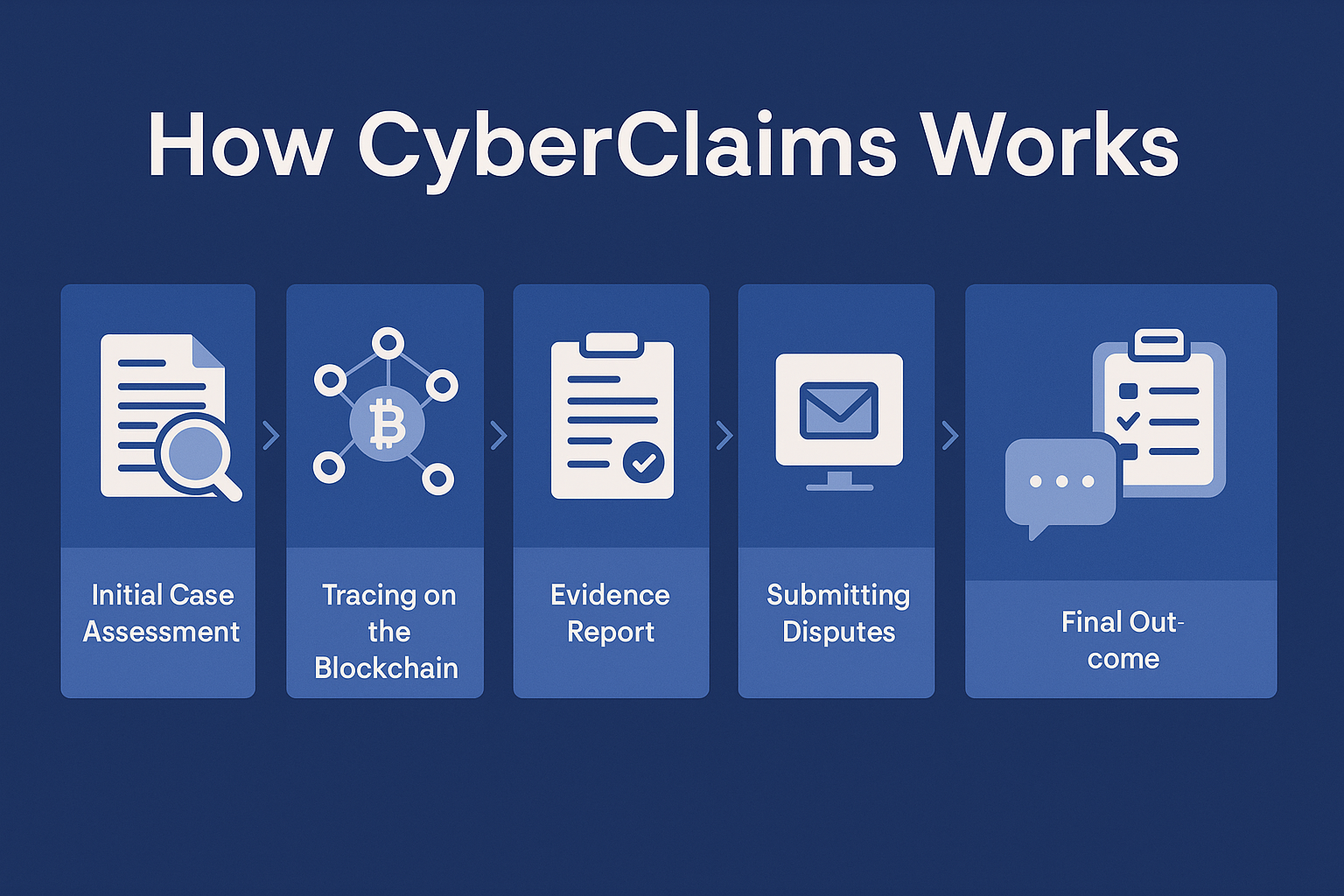
Initial Case Assessment
Every case begins with a review of the information the victim provides. This typically includes screenshots, transaction IDs, wallet addresses and a description of how the scam unfolded.
The purpose of this stage is simple: to determine whether the case has real recovery potential. CyberClaims is selective, and not every case is accepted. If the evidence shows that recovery is unlikely, the team will communicate that honestly before any paid work begins.
This early assessment ensures transparency and prevents victims from investing further into situations where no meaningful action is possible.
Tracing What Happened on the Blockchain
Once a case is accepted, CyberClaims begins the tracing process. Although crypto can feel anonymous, every transaction leaves a permanent digital footprint. By analyzing these public records with forensic tools, CyberClaims follows the movement of the stolen funds through the blockchain.
This investigation reveals where the money was sent, which wallets were involved and whether the assets eventually reached a regulated exchange or service provider.
In many cases, understanding this flow is the key to identifying where a dispute can be filed and where compliance teams may still be able to act.
Preparing a Structured Evidence Report
After the tracing phase, CyberClaims prepares a formal report that explains the case clearly and professionally. It outlines the scam, the movement of funds, the wallet connections and any regulatory concerns that may apply.
This report is written in a format that financial institutions, banks and exchanges recognize and take seriously. Instead of a general complaint or an emotional message, the institution receives a documented fraud case supported by technical evidence and a timeline of events.
Submitting Disputes to Exchanges and Payment Services
With the report complete, CyberClaims contacts the relevant institutions. Depending on the case, this may involve international crypto exchanges, fiat on-ramp providers or banking partners connected to the transaction flow.
The goal at this stage is to request actions such as reviewing the receiving account, freezing funds that are still accessible, or investigating suspicious activity.
Institutions are far more responsive when they receive structured evidence, and CyberClaims’ approach is designed to meet the standards required by compliance departments.
Ongoing Follow-Up and Communication
Recovery rarely happens from a single message. It is a process that requires consistent follow-up.
CyberClaims manages all communication with institutions, responds to their questions, provides additional documentation when needed and keeps the client informed of all updates.
This ongoing dialogue is one of the most important parts of the process. Persistence, clarity and professionalism often lead to results that would not be achievable through a one-time complaint.
Final Outcome and Next Steps
When the dispute cycle is complete, CyberClaims provides a summary of what was done and what was discovered.
This may include information about any frozen accounts, compliance responses or recovery steps that were successful. Even in cases where full recovery is not possible, clients receive detailed documentation that can be useful for regulators or law enforcement.
Transparency is a core part of this stage. Clients are never left guessing about what happened behind the scenes.
What CyberClaims Does Not Do
It is equally important to understand what CyberClaims does not offer.
The service does not claim to hack wallets, recover funds instantly or work with law enforcement on the client’s behalf. It does not request crypto payments or make promises of guaranteed results.
The entire process is based on legitimate, established methods: tracing, documentation and compliance-driven dispute resolution.
Summary
CyberClaims works through a structured, professional approach that includes case evaluation, blockchain tracing, formal reporting, dispute filing and consistent follow-up with financial institutions.
The goal is to give victims a realistic and evidence-based path toward recovering stolen funds.
For anyone unsure of what to do after a crypto scam, CyberClaims.net provides a clear and credible starting point.